


(The following is an adapted portion of an article that appeared at Christ Over All in December 2024: “The Messiah and Psalm 22: A Carol of the King.”)
Most modern performances of Messiah take place during the Advent season. This custom would have been unfamiliar to the two who wrote Messiah: Charles Jennens and George Frideric Handel. (Charles Jennes compiled the Scriptural texts that Handel put to music.)
They wrote Messiah for performances during Lent and Easter, that time of year when Christians round the world remember the vicarious death and resurrection of the Lord Jesus Christ in the place of sinners.
No section of Messiah showcases the love of Christ in his suffering for sinners more clearly than Part II:
I. Christ’s Passion, Scourging, and Crucifixion (Scenes 22–30)
II. Christ’s Death and Resurrection (Scenes 31–32).
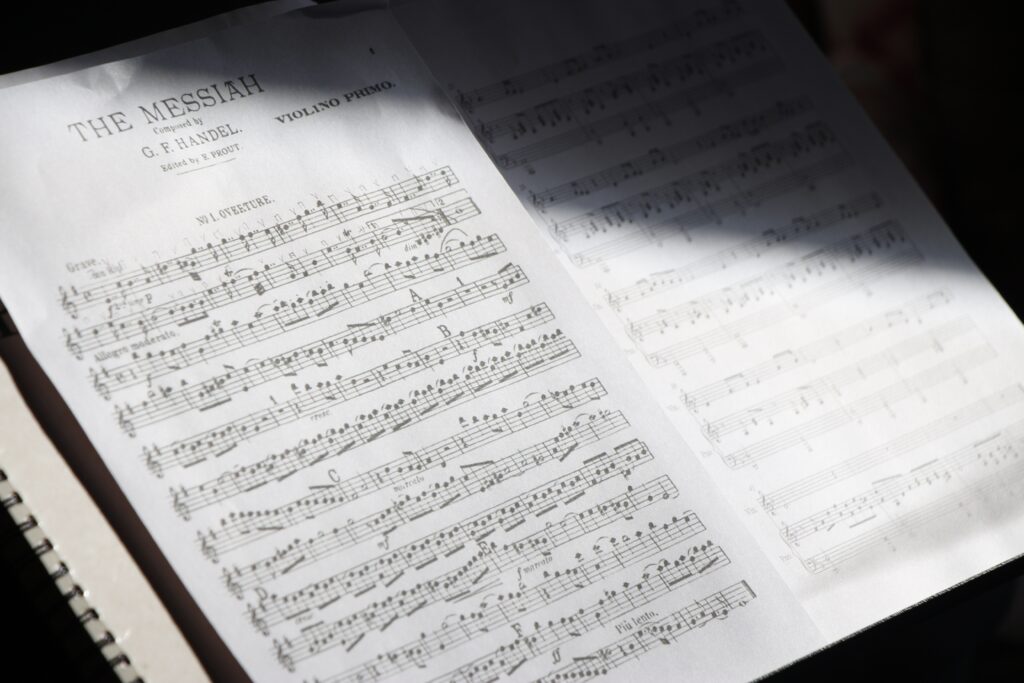
Handel opens Part II of Messiah, like Part I, with another French-styled piece, yet this time he employs a minor key and a chorus. Handel is matching Jennens’s text, hinting at the kind of king to come. The music of Part II, as with Part I, also opens with a cry of John the Baptist.
The fugal chorus takes up his words singing somberly, “Behold the Lamb of God, which taketh away the sin of the world” (John 1:29 KJV). Following the call to “Behold, the Lamb,” one song after another holds up a picture of Christ’s anguished suffering from Isaiah 53 (Scenes 22–31)
Slashing strings sound like lashes across the Savior’s back. “Dotted rhythms in the opening chorus ‘Behold the Lamb of God,’ in the second section of the great alto aria ‘He was despised’ and in ‘Surely He hath borne our griefs’ evoke jagged extremes of pain and suffering.” This is not the king we expected to behold, whose entrance Handel had announced with the opening royal overture of Part I. Nor is it the outcome we expect of the babe lying in a manger at Christmas. But here we arrive at the heart of Handel’s Messiah, compositionally and thematically. We arrive at the heart of God’s Messiah, too. His throne lies not in a palace, but on a tree.
After the opening chorus “Behold the Lamb” in Part II, Handel writes to make us behold Christ for over ten minutes. We see him “despised and rejected … [giving] his back to the smiters” in the alto’s aria (Scene 23, Isa. 53:3; 50:6). Here Handel gives us the longest piece of music in the entire oratorio. He will not let us look away. Moreover, with every song after the choruses call to “Behold, the Lamb of God,” Handel moves farther away from the opening key of Part II (G minor). Adding flats to every successive song, Handel musically descends deeper and deeper into the darkness of Christ’s suffering, taking the listener all the way down with him.
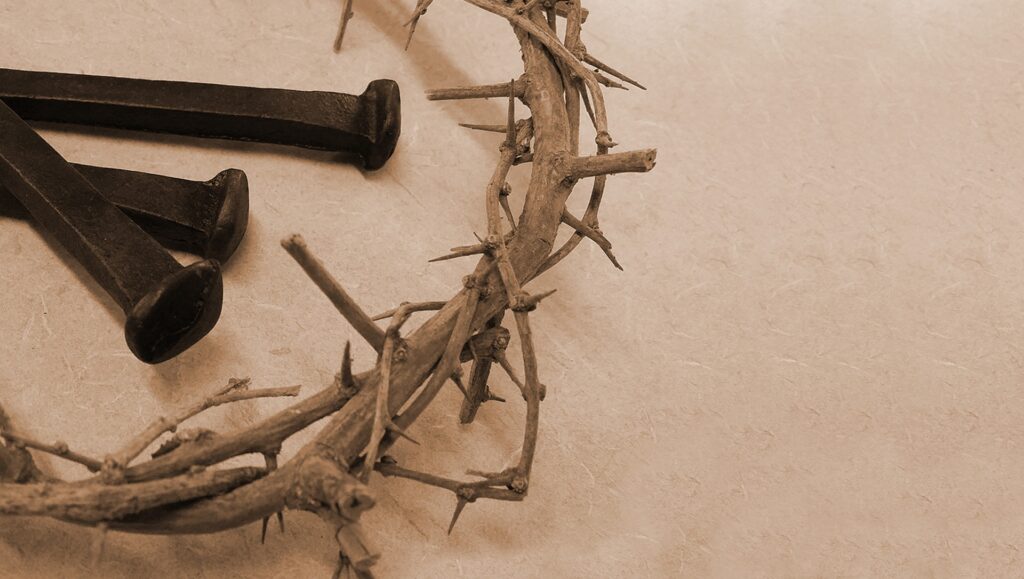
Handel was preparing us for the Carol of the King in Psalm 22
For the full article, see Brad Baugham, “The Messiah and Psalm 22: A Carol of the King,” Christ Over All, 19 December 2024.
